

Puls Fog – Thermal Fogging Devices | The Fast and Practical Solution with Thermal Fog Technology
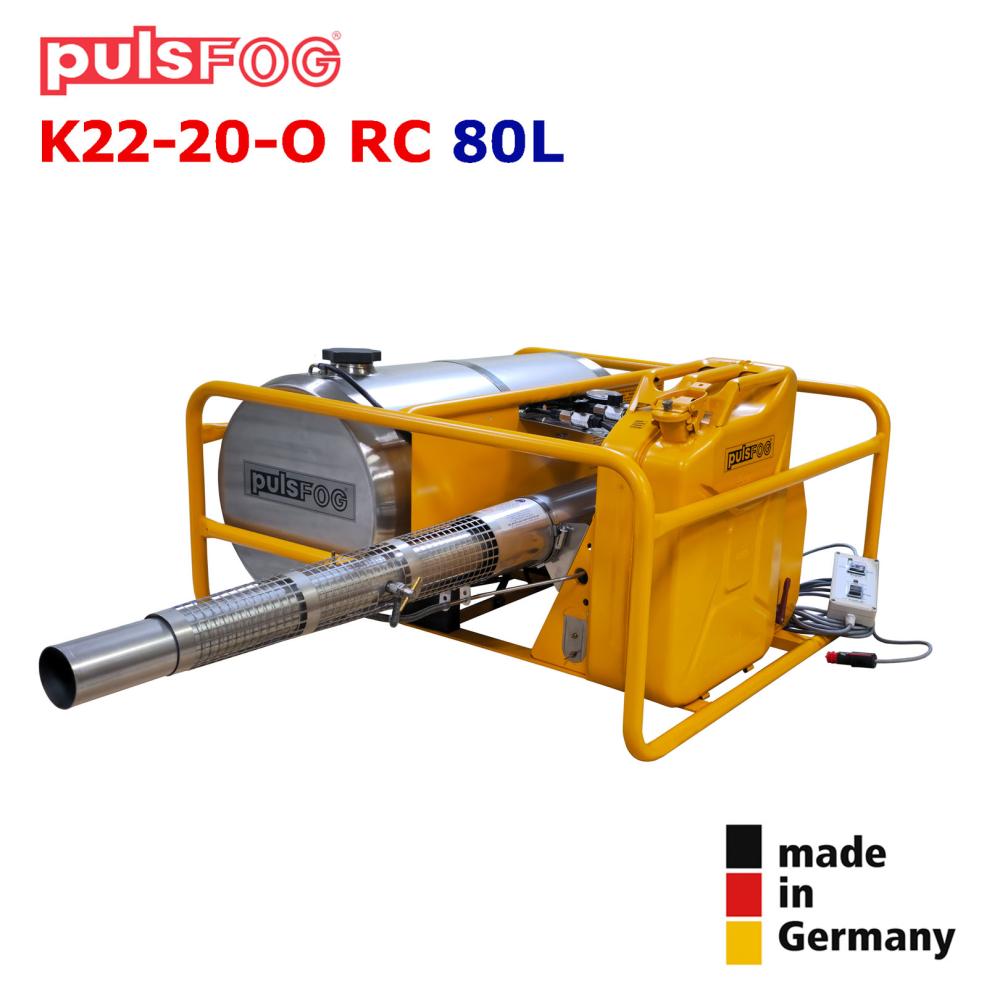
The Puls Fog thermal fogging machine delivers chemical application with exceptional speed and efficiency. One of its key advantages is its ability to cover up to 150,000 square feet in under 45 minutes. This speed reduces labor costs and minimizes the amount of chemicals needed by producing billions of micro-sized droplets in a single operation. Puls Fog thermal foggers are equipped with a Puls Jet Engine, a globally patented innovation from which the company name “PulsFog” is derived. A standout feature is the lightweight build and high efficiency compared to traditional machines. The engine contains no moving mechanical parts, allowing for unlimited and maintenance-free operation. The combustion chamber is bottle-shaped and directly connected to the exhaust pipe. The engine features a direct fuel injection start-up carburetor (PulsFog patent) and a vibrating diaphragm air intake valve, which regulates the pulse rate and combustion cycles inside the chamber, maintaining 80 to 100 pulses per second.
The fogging machine comes with remote control, is genuine German-made, safe, easy to use, and heavy-duty. It effectively covers large areas using minimal pesticide amounts compared to traditional water-based spraying. It delivers strong impact performance due to the fog’s ability to penetrate deep into hard-to-reach areas. The spray tank has a capacity of 55 liters, the weight is 18 kg, and the dimensionsare 132 × 38 × 47 cm. The fuel tank capacity is 20 liters, and the engine displacement is 1000 cm³.
Thermal fogging applications include delivering pesticides into hidden areas where insects nest and where conventional equipment cannot reach. It is also used for airborne disinfection and surface sanitization, particularly for ceilings and structures in cattle and poultry farms.
What is thermal fogging?
Thermal fogging is the process of generating ultra-fine droplets ranging from 1 to 50 microns using a stream of hot air that vaporizes the chemical solution at the outlet of the fogging pipe. As the vapor exits and hits cooler air, it instantly condenses into dense fog clouds, allowing for deep and efficient penetration of the treatment into the environment.